Devotion of a Violin Maker (Featured in New Straits Times)

DRESSED neatly in a black polo shirt bearing the name of his studio, Deciso, violin-maker Tan Chin Seng defies all my preconceptions of a ravaged, reclusive maestro who’s turned his back on the world, preferring the company of his stringed companions.
Currently Malaysia’s sole professional violin maker, the 37-year-old was initially tight-lipped as if determined to keep trade secrets under wraps. Seated in a shiny maroon leather chair, his demeanour fluctuates from that of discerning, serious artisan to childlike wonder when he eventually speaks about his labour of love.
“Musical instruments have always held a high degree of fascination for me,” says Tan. “But it was really when I started attending expos and fairs that I was captivated by the enthusiasm of maestro violin makers and the beauty of their handcrafted objects”.
-Advertisement-
Despite the solitarily nature of his work, Tan’s professional world is one heavily peopled by maestros, artisans, musicians, students, suppliers and potential buyers, not to mention the ghosts of Italian master craftsmen, the pioneering Andrea Amati and Antonio Stradivari who he cites as influential in terms of design and structure.
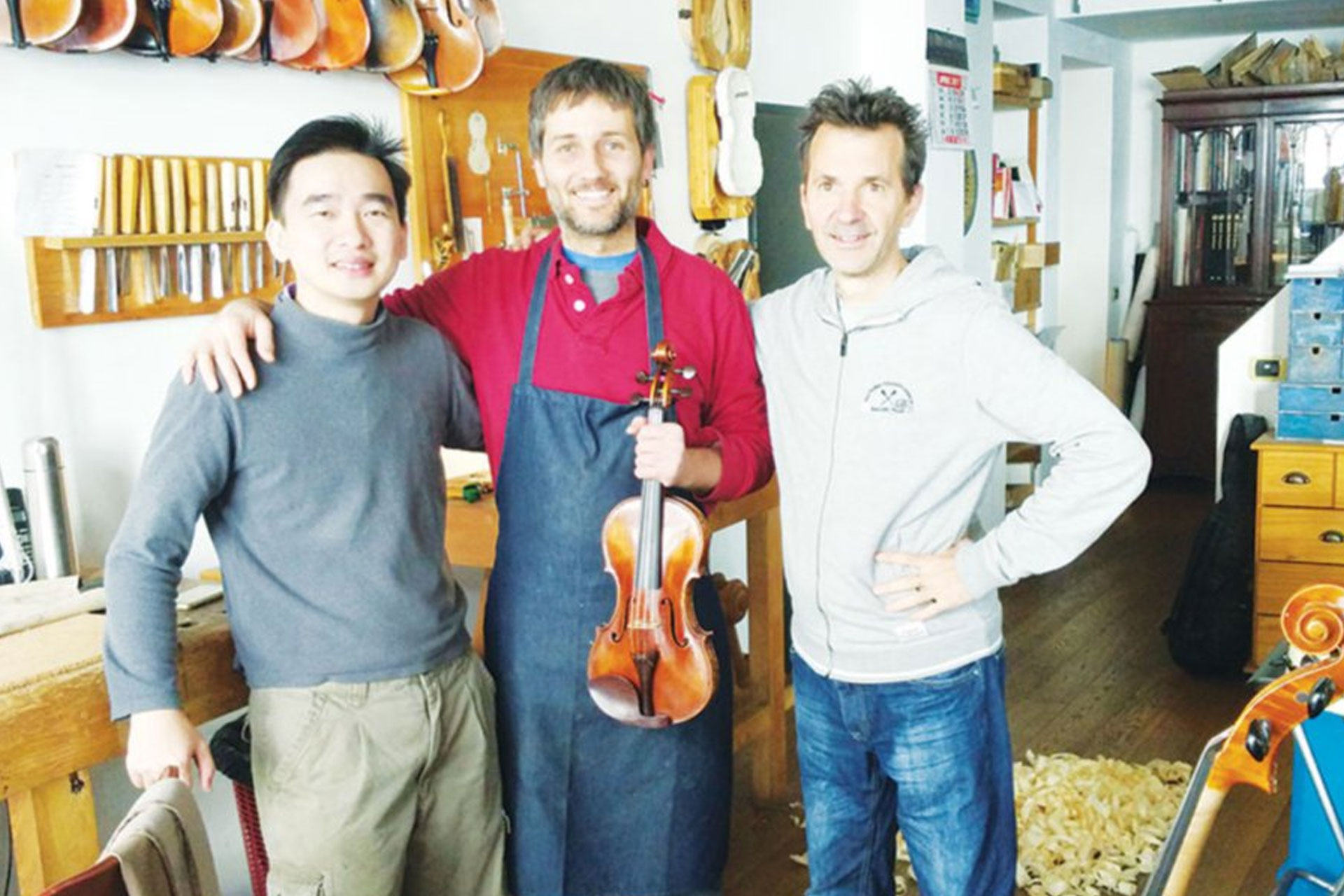
Yet Tan is quick to assert that his violins are not reproductions, but are rather a culmination of several influences, including ones notably derived from his own teacher, Han Zhao Sheng, whom he met on the rural outskirts of Beijing more than seven years ago. Introduced to Han by a friend he met at Shanghai’s Music China festival one month earlier, Tan recalls a life-changing moment.
“As soon as I walked into Han’s workshop, there was a feeling I’d arrived somewhere truly special,” he recalls, using his gifted hands to punctuate his passion. “I knew then that if I was fortunate enough to have my own workshop, I’d want it to be like his”.
Over the next few years, Tan visited Han Zhao Sheng for weeks at time, attending one-on-one violin craftsmanship intensives which has since expanded to include the viola, and more recently the cello. His passion and unquenchable thirst for knowledge would take him to the hallowed studios of Cremona, Italy, the renowned centre of musical instrument manufacturing, to the “string city” of Donggaocun, China which produces one-third of the world’s violins annually.
Introduced and smitten by the best traditions from the East and the West, Tan knew his days in a well-established family business were numbered, and longed to pursue his passion professionally on a full-time basis. His family supported him in his unwavering determination to build his own workshop, and Deciso (Italian for “decided”), was ultimately born.
CREATING AN ENGINE
The present workshop located in Kepong, KL serves the dual purpose of a gallery and a meeting place, with ceiling-to-floor glass-enclosed cabinet housing an assortment of handcrafted violins that Tan’s collected from all over the world.
Strategically-placed contemporary Chinese ceramics are juxtaposed against the violins, the great stringed symbol of the late Italian Renaissance period, resonating relevance and meaning in the present. This fusion of two enduring traditions of craftsmanship also reflects Tan’s own personal heritage as well as his journey to acquire the best skills from abroad. From the gallery, the studio virtually transforms into an interactive museum, with internal windowed rooms devoted to the key stages of violin production.
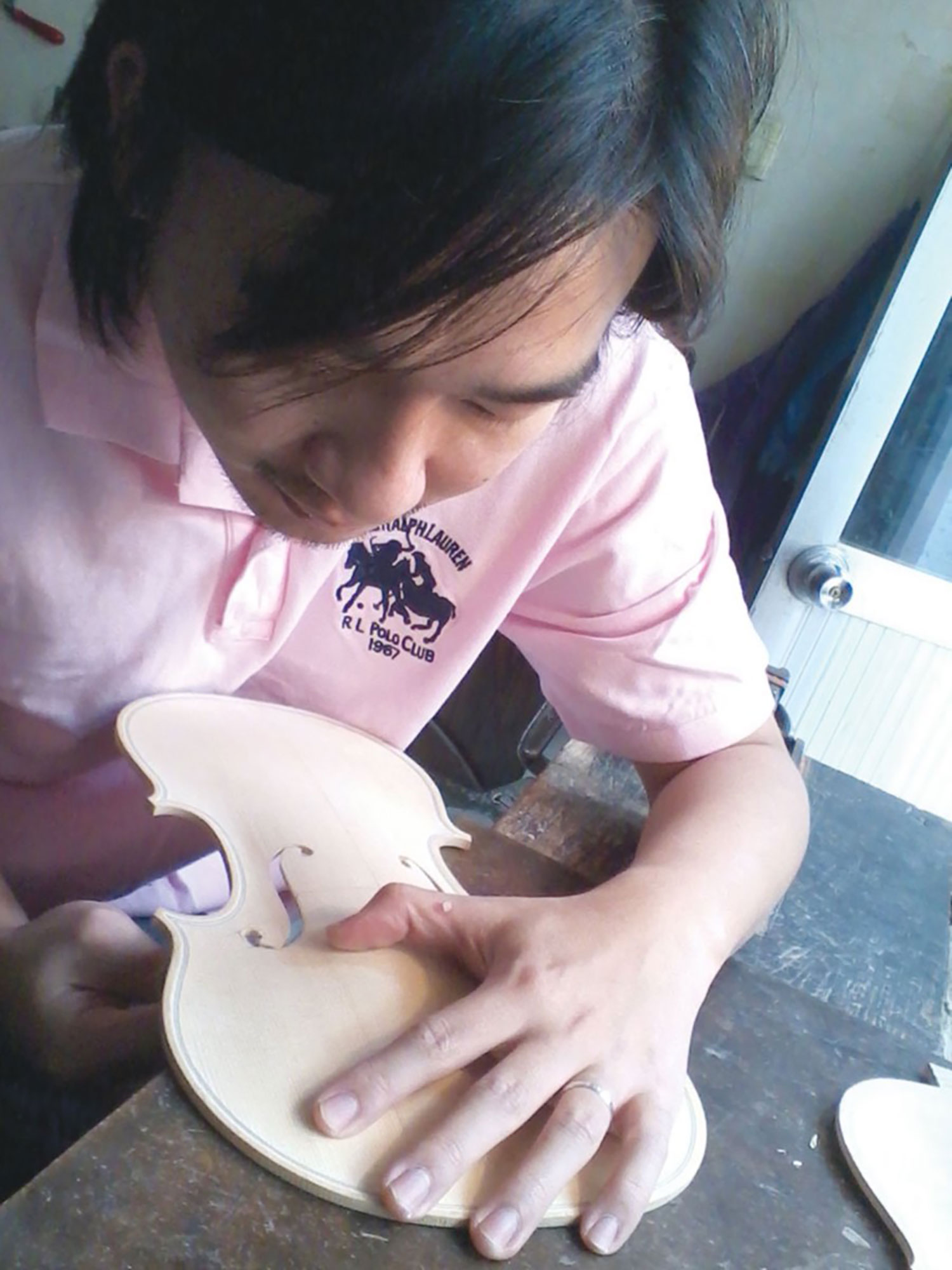
It takes two months for Tan to make a violin from start to finish. The second month is generally reserved for varnishing which, in between the drying of layers, is time to begin carving the next violin. All materials are imported, with the maple for the upper and lower bout, neck and scroll from Italy, Switzerland, and Romania, while the spruce for the front and back of the violin is sourced from the famed “musical trees” of Italy’s Val di Fiemme.
For Tan, the hardest part of the process is during the early stages of carving when concentration is critical. “You can take away wood, but you can never replace it”, he announces with a smile as though he has uttered an old Chinese proverb. It’s a statement that reverberates through air, and one that reveals both his practical and philosophical approach to his craft.
“I see myself as creating an engine”, he muses, adding: “Although the instrument is technically ‘powered’ by the energy of the musician, the quality of sound is determined by its maker. That’s quite a lot of responsibility”.
Though he admits that the market is generally slow for handcrafted violins in Malaysia, the current climate suits him for now, especially as he works on his own. It also leaves him more time to refine his skills.
LABOUR OF LOVE
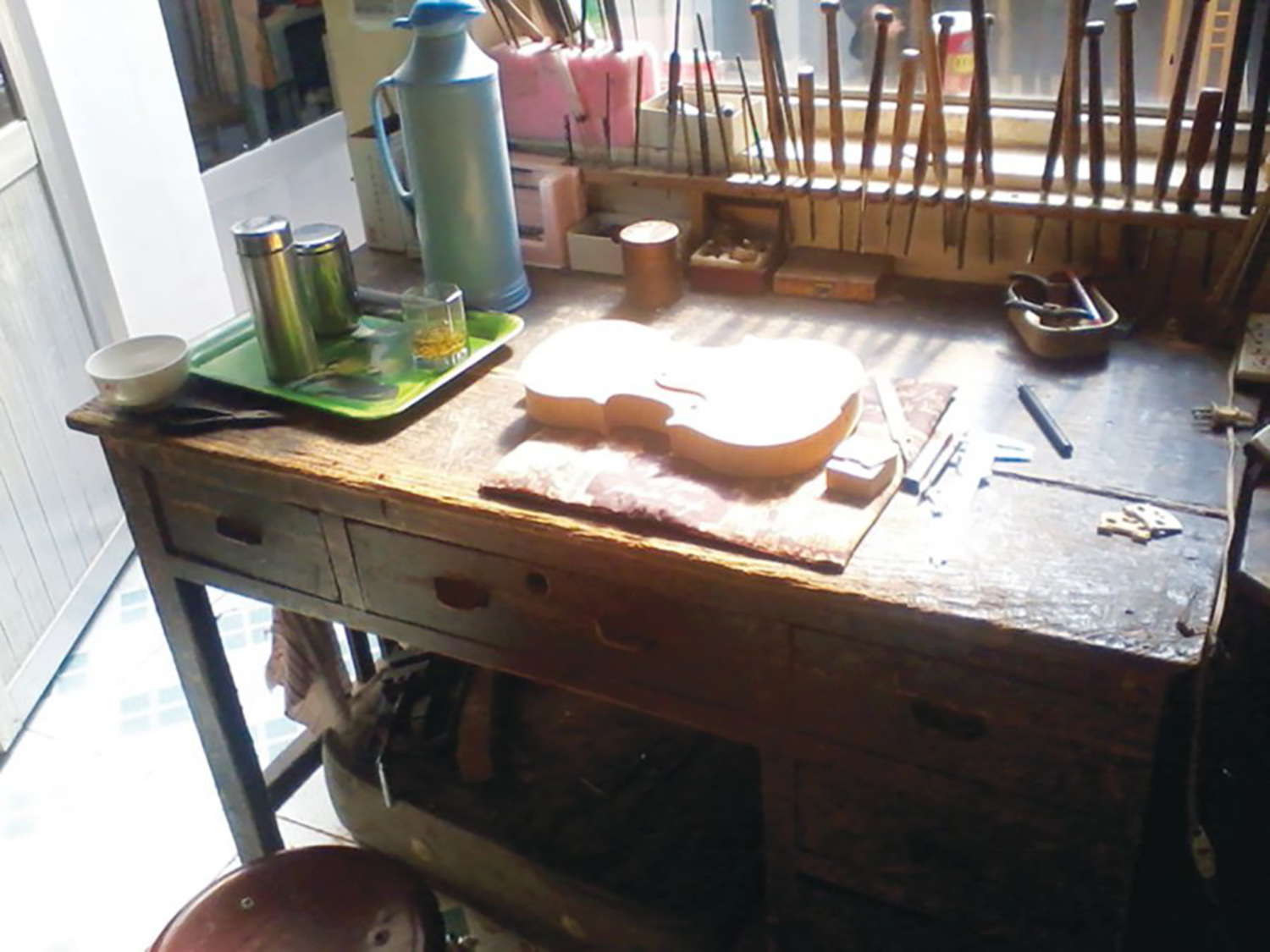
For Tan, an average day on the job begins at 8am with carving when his concentration level is at its peak. Late afternoons and occasionally weekends are reserved for teaching his students the art of violinmaking. Profoundly appreciative of the impact his teachers had on him during his days as a student, Tan is also mindful of the tradition he has inherited and possesses a deep desire to pass on these skills. He relishes the opportunity to teach his craft, and contrary to the profession being male-dominated, four out of five of his students are female.
The affable artisan states that he has two jobs: One is handcrafting a violin, the other is to present the instrument before professional players. Some of his toughest critics are musicians who’ve had access to high-performance instruments early in their musical development, resulting in a deeper self-awareness of style and taste.
He takes criticisms positively, always turning them into a learning point, and although he understands well how one violin holds a different timbre to another musician, all advice is taken into consideration when producing his next best violin.
As with all violin makers, including maestros from the distant past, Tan himself isn’t actually a violinist. It’s a fact that may surprise the musically-uninformed and uninitiated. It can be a complicated relationship between the maker and the player, he explains, especially as the demands have become more sophisticated. That said, it continues to be a rewarding one.
Deciso Violin Gallery is a labour of love. Humbled by the great tradition of violin making which stretches back 500 years, Tan feels that his exquisitely handcrafted instruments are designed to help a musician find his or her own voice in today’s world. And there is quite simply nothing more rewarding than to hear your instrument played by a devoted violinist.